The Science of Deep Fried Memes: Why a Low Quality Image Gets More Clicks
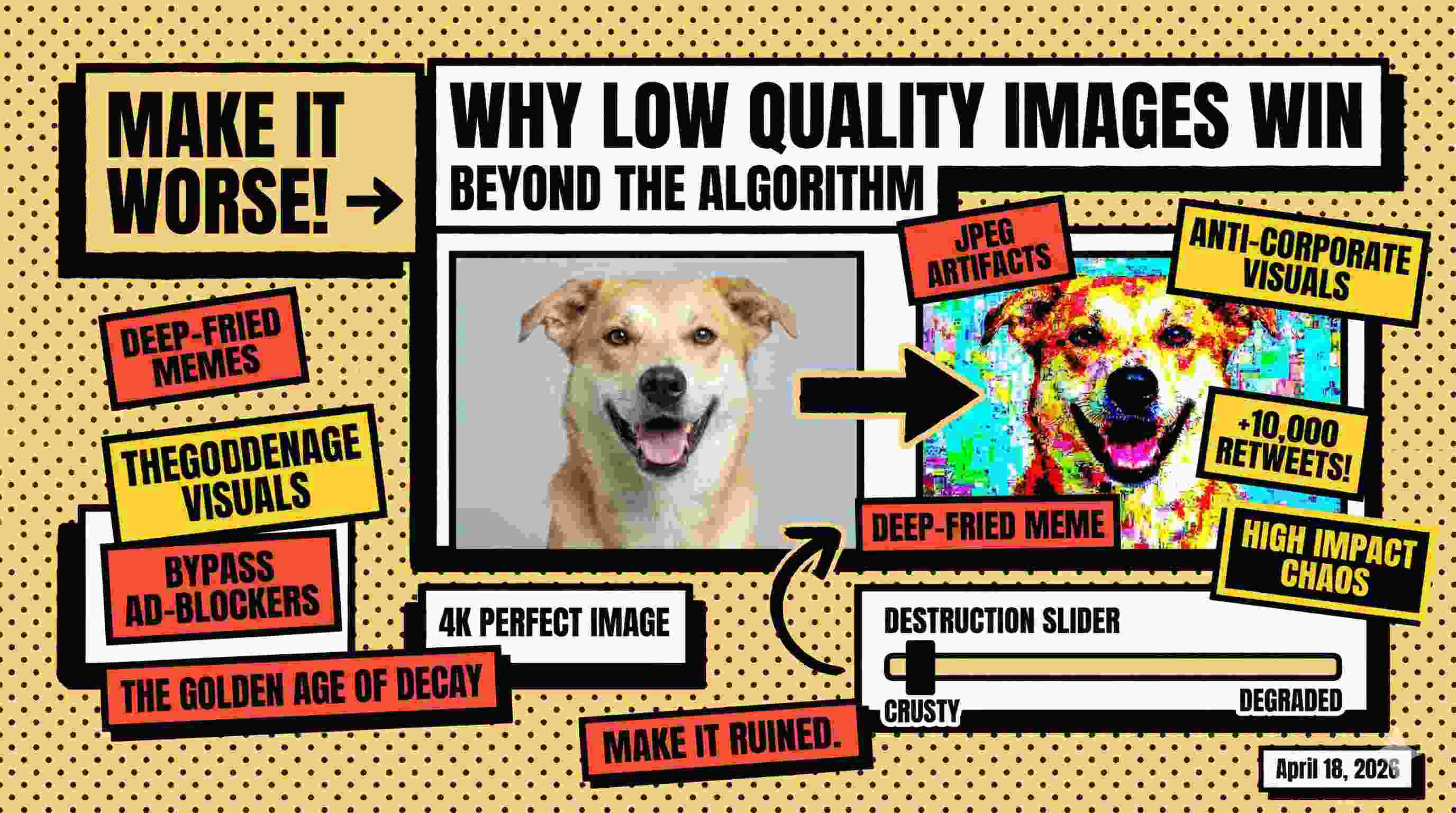
Picture this: You spend three hours designing a crisp, 4K, pixel-perfect graphic for your social media. You post it. It gets 14 likes and a comment from a bot.
The next day, you post a heavily compressed, incredibly blurry, borderline unrecognizable picture of a dog staring at a wall. It goes absolutely viral. 10,000 retweets.
Why does this happen? Is the algorithm broken?
No. The algorithm is working perfectly. You just haven't realized that we are living in the golden age of the low quality image. Today, we are breaking down the exact psychology of why internet culture is obsessed with digital degradation, and how you can actually use it to your advantage.
The "Anti-Corporate" Aesthetic
If you want to understand the modern internet, you have to understand banner blindness. Users are bombarded with thousands of ultra-polished, highly produced advertisements every single day. Our brains are now hardwired to ignore anything that looks "too good" because perfection usually means someone is trying to sell us something.
A low quality image, on the other hand, immediately lowers our defenses.
When you see a picture that is heavily pixelated, compressed, or "deep fried," your brain doesn't register it as an ad. It registers it as an organic, chaotic shitpost from a friend. It feels authentic. It feels like an inside joke. By intentionally using a low quality image, you are bypassing the user's mental ad-blocker.
What is a "Deep Fried" Meme?
You've probably heard the term, but let's define it. A deep fried meme isn't just a slightly bad photo. It is an image that has been put through the digital wringer.
- Extreme Compression: Stacking JPEG compression until the image breaks into visible, chunky pixel blocks.
- Blown-out Contrast & Saturation: Pushing the colors to bleeding, neon extremes (usually glowing reds and yellows).
- Adding Artifacts: Introducing visual noise, lens flare effects, and warped proportions.
The goal isn't to make the picture look old; the goal is to make it look ruined. The sheer effort required to make a photo look this terrible is part of the joke. It adds a layer of ironic detachment. A crisp photo of a cat falling over is mildly funny. A low quality image of that same cat, compressed until it looks like it was downloaded on a 1998 dial-up connection, is hilarious.
How Marketers and Creators are Exploiting This
This visual chaos isn't just for teenagers on Discord anymore. Smart digital marketers, brand managers, and meme-page admins are actively using intentional degradation to hack the algorithm.
1. Stopping the Scroll
In a feed full of aesthetic lifestyle shots, a crunchy, highly compressed photo acts as a visual speed bump. People literally stop scrolling because their eyes need a second to process the chaos. That split-second pause is all the algorithm needs to register "engagement."
2. Relatability and Community Building
Brands that use a low quality image in their replies or quote-retweets are speaking the native language of the internet. It signals to the audience: "We get it. We aren't just a faceless corporation." Look at how fast-food brands run their Twitter accounts today—it's nothing but compressed memes and chaotic energy.
3. File Size Bypassing
On a purely technical level, generating a low quality image is the ultimate cheat code for bypassing strict file size limits on forums, gaming profiles, and Discord servers. You can crush a massive file into a 20KB footprint without losing the core shape of the picture.
How to Engineer the Perfect Digital Decay
So, how do you actually make one?
If you try to do this manually in Photoshop, it takes way too long. Resaving a JPEG twenty times is tedious. You need a tool built specifically for digital destruction.
That is exactly why we built the Low Quality Image Maker.
Here is the fastest way to get that authentic crunchy look:
- Upload your clean photo (JPEG, PNG, or WebP).
- Drag the destruction slider. Don't just lower the resolution; use our tool to actively introduce heavy JPEG artifacts and pixelation.
- Export your new low quality image. It’s that simple. Zero watermarks, zero upload queues, and 100% processed locally on your browser.
The Takeaway
Perfection is dead. If you want to grab attention in a crowded digital landscape, you need to learn how to break the rules of conventional design.
Stop worrying about 4K resolution. Embrace the noise, stack those JPEG artifacts, and start communicating in the raw, unfiltered language of the internet.
Ready to make some chaotic art? Deep fry your first image right here →